
The Kitchen · Guide

Reviving your starter.

Exact ratios, a day-by-day timeline, the signs of life to watch for, and honest troubleshooting — from the house that grew the culture.

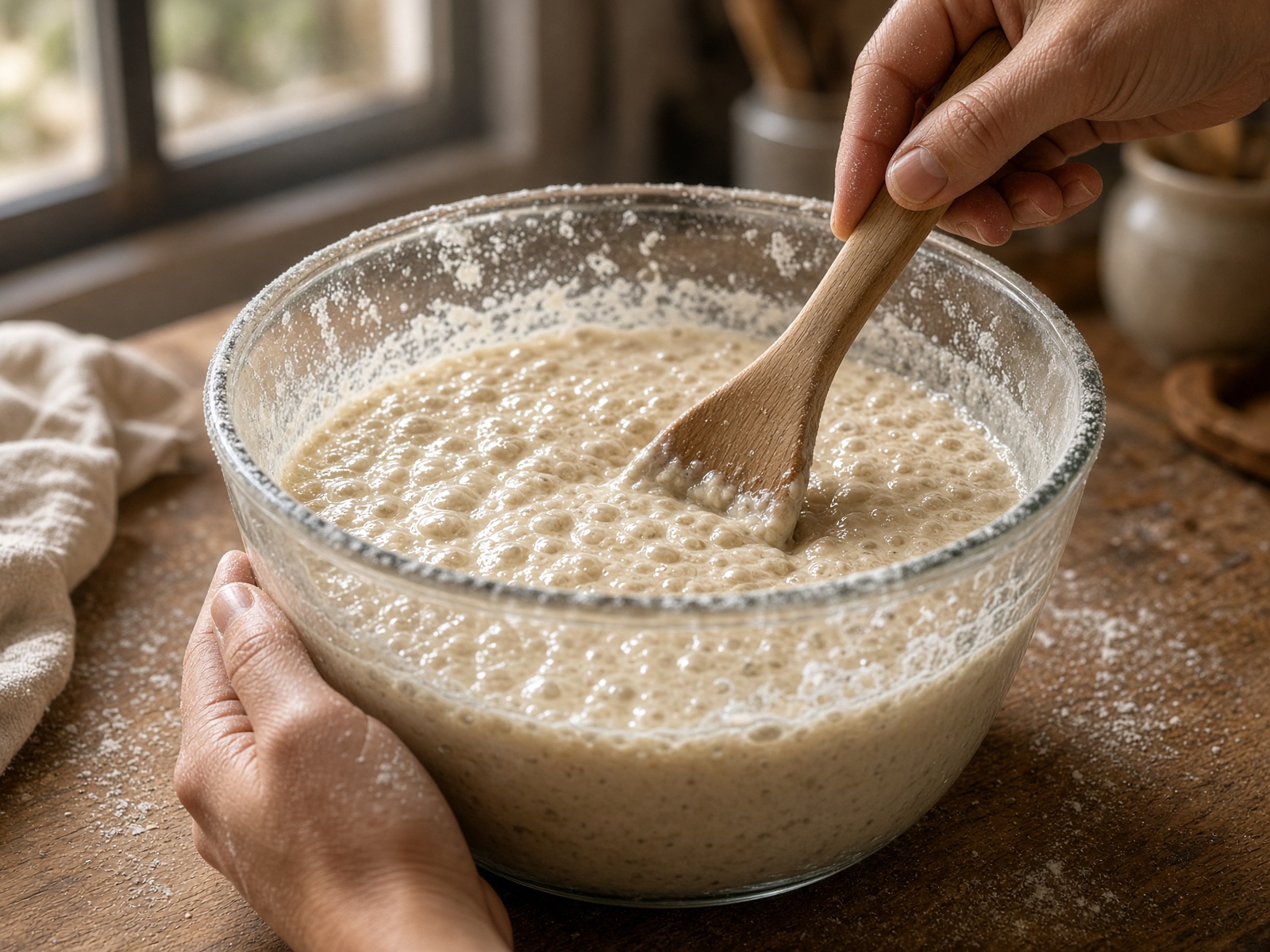
Hands feeding a bubbling starter

Day 01

Rehydrate

Empty the jar into a clean glass container and stir in 3 tablespoons of warm water (warm to the wrist, not hot). Let it sit for an hour so the flakes dissolve back into a slurry. Stir in 2 tablespoons of unbleached flour. The mix should look loose and soupy. Cover loosely (a cloth or resting lid, never airtight) and keep it somewhere warm: 75–80 °F is the culture’s happy range.

Day 02

First feed

You may see a few shy bubbles at the edges — or nothing yet. Both are normal. No discard today: stir in 2 tablespoons of flour and 1 tablespoon of water, aiming for the texture of a thick pancake batter. Cover loosely again and put it back in its warm corner. The culture is rebuilding its population; give it quiet and warmth.

Day 03

Watch it rise

Discard all but a tablespoon, then feed as yesterday — 2 tablespoons of flour, 1 of water. Within hours it should bubble visibly, rise in the jar, and smell pleasantly tangy. The bake-ready test: it doubles in volume within 4–8 hours of a feed. A rubber band around the jar at the surface line makes the rise obvious. When it doubles reliably, bake anything.

Signs of life

  • It doubles within 4–8 hours of a feed — the one test that matters.
  • The surface domes and webs with bubbles.
  • It smells tangy and faintly sweet — yogurt and warm flour, not vinegar.
  • A spoonful floats in water (useful, but imperfect — trust the doubling first).

If something looks wrong

Dark liquid on top
That’s “hooch” — a harmless layer of alcohol that means the culture is hungry. Pour it off (or stir it in for extra tang), then feed. It is not a sign of death; it’s a request for dinner.
No bubbles by day 3
Almost always temperature. Below ~70 °F everything slows. Move the jar somewhere warmer — near (not on) the stove, on top of the fridge, in the oven with just the light on — and keep feeding daily.
It smells like acetone
A sharp nail-polish or vinegar note means the culture is running out of food. Feed it more often. The smell settles back to yeasty-tangy within a feed or two.
Pink, orange, or fuzzy patches
The one honest stop sign. Discard the batch and write to us; we’ll help you start again. With clean utensils and daily feeds, this is rare.

After day three

If you bake often: keep the jar on the counter and feed it once a day — discard down to a tablespoon, add flour and water, done in under a minute. If you bake weekly or less: keep it in the fridge and feed it once a week. Take it out the night before baking, give it a feed, and it wakes by morning.

Kept fed, a healthy culture outlives every packet of yeast you’ve ever bought. You only ever buy it once.